
An eCommerce agency (or lab) in Mexico is an external provider that implements, migrates or optimizes a company's digital commerce platform, in any of the 3 main verticals: B2B (distribution, wholesale, industrial), B2C (retail, consumer sales) and D2C (own brands direct to consumer). It can cover anything from a small business site on Shopify to the complete architectural redesign of an enterprise B2B portal on commercetools or an omnichannel D2C strategy on VTEX.
Choosing wrong costs 2 to 3 times the project value. In the base of B2B, B2C and D2C projects we have delivered at Edgebound Labs between 2020 and 2025, more than a third started as rescues of failed implementations from previous providers. It was rarely a technical problem. It was almost always a badly chosen vendor.
This guide is not a listicle where the author self-nominates in the top 3. There are already six or seven articles of that style and none help the buyer. This is an evaluation guide: criteria, red flags, concrete questions and real price ranges. The comparison table includes real competing agencies, not just Edgebound. If after reading this you decide another agency fits you better, it is an informed decision, and that is the only goal.
The 5 types of eCommerce agency that exist in Mexico
Not all agencies do the same thing, even if they all use the same sales pitch. Distinguishing the profile from the first meeting is fundamental.
| Type | What they do well | What they do NOT do well | When it applies | Typical range (USD) |
|---|---|---|---|---|
| Digital marketing agency that "also does eCommerce" | Ads, SEO, content | Architecture, ERP integrations, technical scalability | Small store already running, you want to grow traffic | Not applicable (no technical build) |
| Freelancer or local boutique | Low price, proximity | Scaling, guaranteeing SLA, complex deliveries | Very limited budget, simple project, high risk tolerance | US$5K–30K |
| Official platform partner (Shopify, BigCommerce, commercetools, VTEX) | Certified implementation, access to vendor support | Objectivity when the platform is not the best fit for your case | You have already chosen the platform and want a certified implementation | US$40K–200K+ |
| International consultancy (Icreon, TCS, Valtech, Apply Digital, Deloitte, Accenture) | Methodology, global reach, enterprise cases, formal RFP | Cost, cultural proximity, alignment with mid-market ICP, LATAM response times | Multi-country project, enterprise budget USD 2M+, formal RFP requirement | US$200K–2M+ |
| Commerce lab with AI (MACH / composable / AI-native) | Modern architecture, long-term scalability, AI integration | Not the cheapest for simple implementations | Complex implementations, legacy migration, 5+ year bet | US$30K–400K+ (by stage/area, see /en/pricing.md) |
Quick evaluation trick: ask the agency (or lab) to explain in one sentence what they do NOT do. If they answer "we do everything", it is a type 1 agency disguised as type 5. Types 3 and 5 know which cases they reject and why.
Agency or lab: the practical difference. A traditional agency delivers the project and steps back. A digital commerce lab experiments, measures, iterates and scales with the client. The distinction is not semantic: it changes how you contract, how you invoice, how you measure success. A lab like Edgebound Labs operates with a living-systems mindset, every implementation is a hypothesis measured against business metrics, not a closed deliverable. If your project is a single delivery without further evolution, a traditional agency may be enough. If it is a commerce engine that will grow with you for 3+ years, a lab serves you better.
10 objective criteria to evaluate any agency
These criteria work for any of the five types. Use them as a checklist in the first three calls.
1. Verifiable official certifications
A partner tier must be published on the vendor's site, not just on the pitch. Verify at commercetools.com/partners, partners.bigcommerce.com/directory, the Shopify Partners directory, the Adobe Commerce Solution Partner directory and machalliance.org/members. Other certifications that add up: ISO 27001 (information security), Hecho en México (official distinctive from the Ministry of Economy), cloud certifications (AWS, Azure, GCP).
2. Cases with verifiable metrics
"We worked with [enterprise logo]" does not count if there is no documented case. Ask: which metric changed, by how much, in how long, in which project? If they can't say it specifically, it's generic marketing.
3. Independent reviews
Profiles on Clutch, DesignRush, GoodFirms and The Manifest are a window to external evaluation. What the agency's site says about itself does not count. What a client wrote without filter does.
4. Declared technical stack
A good agency tells you explicitly what it builds: commerce platform (commercetools, BigCommerce, Shopify Plus, VTEX, Adobe Commerce, SAP Commerce Cloud, Salesforce Commerce Cloud), integration stack (MuleSoft, Apache Camel, Node.js, Boomi), headless CMS (Contentful, Sanity, Storyblok), data management (PIM, DAM), analytics (GA4, Mixpanel, Segment). If the stack is in a signed PDF, not a pretty slide, better.
5. Documented methodology
Ask for the written summary of how they deliver. If they don't have it documented, delivery upon delivery will be done "as it comes". Look for words like: discovery, design sprints, solution architecture, phased roadmap, post-launch hypercare, guarantee.
6. Transparent pricing model
Three valid models: fixed by scope, time and materials (T&M) and value by outcome. The mixed model also works (for example, discovery on T&M, delivery on fixed). What is NOT acceptable: quote without clear scope, budget that "gets defined along the way", 100% upfront payments.
7. In-house team vs contractors
There is no sin in using contractors. The sin is not saying so. Ask: What percentage of the team assigned to my project is a direct employee of the agency or the lab? Less than 60% is a warning sign.
8. Declared post-launch support
The day the project goes live is when it really begins. Ask about hypercare (2 to 4 weeks of intensive post-launch accompaniment), support SLA (response times by severity) and access to the implementation team vs generic ticket channel.
9. Location and time zone match
LATAM nearshore has a real technical advantage over offshore Asia. Time zone match means possible dailies and real-time communication. If the agency has most of its team in +6 zone or beyond, evaluate the trade-off against the savings.
10. Contactable direct references
Ask for two or three references from projects comparable to yours, with the agency's permission to call them. Talk with them without the agency present. Ask: what went wrong and how did they solve it? The answer to that question tells you more than the other nine combined.
Comparison table: 5 real agencies in the MACH / composable segment in Mexico (B2B, B2C and D2C)
This segment (MACH + composable + real presence in Mexico + mid-market and enterprise implementation capacity) is smaller than the listicles make it seem. Filtering out duplicated players and enterprise consultancies that don't play in the same field, five comparable players remain. All verifiable in the platforms' official directories.
| Agency | HQ | Platform | Strong in | Key differentiator |
|---|---|---|---|---|
| Edgebound | CDMX | BigCommerce, commercetools + MACH + AI + Composable | B2B · B2C · D2C | Commerce lab with native AI. Full ecosystem integration (ERP, OMS, PIM, payments). ISO 27001, Hecho en México. |
| Orium (ex-Gluo) | Toronto + GDL | BigCommerce, commercetools Composable + MACH | B2C · D2C | MACH Alliance since 2021. Retail-focused, North America reach. |
| Vicom | CDMX | VTEX | B2B · B2C | First VTEX agency partner in Mexico. Legacy migrations and B2B/B2C unification. |
| NULogic | Mexico | Commerce Cloud + Adobe + Contentful + Algolia | B2B · B2C · D2C | Diversified composable stack. MACH Alliance. Mid-market and Enterprise. |
| WolfSellers | MX · PE · CO | Adobe Commerce + Shopify | B2C · D2C | Strong depth in Adobe Commerce (Magento). LATAM tri-country presence. |
How to read the table:
- Platform: where each agency concentrates most of its implementations. If your platform decision is already made, filter by this column first.
- Strong in: the verticals where each agency has volume of verifiable cases. B2B, B2C and D2C have different dynamics (customer-specific pricing vs dynamic pricing, approvals vs quick checkout, segmented catalogs vs single catalog). Not all MACH agencies cover the 3 with the same depth.
- Key differentiator: what each agency does that others don't, together with the certifications that back it. Verify every cited certification in the official platform directories: commercetools.com/partners, machalliance.org/members, Shopify Partners, Adobe Commerce Solution Partners, and the VTEX Partner Ecosystem. If an agency can't articulate its differentiator in one sentence, it probably doesn't have one.
Intentionally outside this table:
- Enterprise consultancies (Icreon, TCS, Valtech, Apply Digital, Deloitte, Accenture): excellent providers for multi-country projects with USD 2M+ budget and formal RFP, but they don't fight in the same mid-market segment.
- Pure BigCommerce agencies: a good option if you have already decided BigCommerce and don't evaluate MACH alternatives.
- Shopify + marketing-first agencies: strong in simple D2C on Shopify with focus on traffic and performance marketing. Good choice if your D2C project is up to 3K SKU catalog, without ERP/OMS/PIM integration complications.
8 red flags: when to run
These are signs that in 20 years in the Mexican market we have seen correlate with failing projects. If two or more appear in the same agency, consider passing.
1. "All-inclusive cheap"
A B2B implementation does not cost USD 10,000. Period. If the quote is suspiciously low, the savings get charged later in scope changes, hidden subcontracting or mid-project abandonment.
2. Invisible technical team
Ask the agency for the LinkedIn profiles of the lead architect, tech lead and project manager who will be on your account. If they don't send them or the profiles are empty, they don't have a team or they are subcontractors.
3. No verifiable case in your vertical
Retail is not the same as B2B distribution. B2B is not the same as marketplace. If their portfolio doesn't include at least two projects comparable to yours, you will pay the learning curve.
4. Artificial time pressure
"The price is only valid if you sign this week". No serious implementation works with that dynamic. It is low-quality sales technique.
5. Certifications you don't verify
Anyone can put "commercetools Partner" on their site. Verification happens in the manufacturer's directory. If it doesn't appear there, it isn't.
6. No formal discovery
Quoting before understanding. If they send a proposal with closed price without at least one structured discovery session of 60 to 120 minutes, they are selling commodity, not consulting.
7. 100% upfront payments
The Mexican market standard is 30 upfront, 40 at mid milestone, 30 at launch. Any structure far from that (especially 100% upfront) is pure risk for the client.
8. Quote without exclusions scope
A quote without an explicit "what is NOT included" list guarantees change fights in the delivery phase. The exclusions list matters as much as the deliverables list.
15 questions for the first meeting
How they answer these questions tells you more than any deck.
Technical
- What commerce platform do you recommend for my case and why NOT another?
- How would you handle integration with my current ERP (SAP Business One, Intelisis, Oracle, Dynamics)?
- What data architecture would you use: monolithic, headless, composable? Why?
- What is your approach to testing (unit, integration, E2E, UAT) and who does it?
Commercial
- What is your price range for a project my size (declare headcount, GMV or ARR)?
- What contract model do you use (fixed, T&M, value)?
- What is your payment structure by phase?
- What is explicitly excluded from your standard quote?
Operational
- How long from kickoff to MVP, and from MVP to production?
- How does your discovery process work? How long does it last?
- What percentage of the team assigned to my project is your employee vs contractor?
- How is daily communication done: Slack, Teams, dailies? At what hours?
Post-launch
- Do you offer hypercare? How many weeks? Is it included in the quote?
- What is your SLA by incident severity for long-term support?
- If something goes wrong in production due to your error, how is the cost resolved?
Save the last question for the end. It's the one that separates those with mature processes from those who improvise.
Real price ranges by project type
The following ranges are based on the B2B and D2C project base delivered by Edgebound in the Mexican market between 2023 and 2025, cross-referenced with the annual commercetools analysis on implementations. Prices in USD to facilitate comparison with international providers.
Migration to headless or MACH architecture (any vertical)
USD 50,000 to 300,000. Depends on: number of storefronts, number of languages and currencies, catalog complexity (up to 10K SKU vs 100K+), integration depth (1-2 systems vs 5+ between ERP, OMS, PIM, payments) and whether there is data migration from a legacy platform. Applies the same for B2B, B2C and D2C: the range is explained by technical complexity, not by vertical.
New B2B portal from scratch
USD 80,000 to 250,000. Includes: catalog with customer-specific prices, online quotes, recurring orders, internal approvals, integration with ERP and CRM. Does not include: platform license acquisition (commercetools, BigCommerce B2B Edition, VTEX B2B), which are additional.
New D2C (own brand, standard catalog)
USD 30,000 to 90,000. Typical range for D2C with catalog up to 3K SKU on Shopify Plus or VTEX, with integration to payment gateway, carrier and a basic inventory system. Rises toward the ceiling with multi-channel (marketplaces), subscriptions, multi-warehouse inventory, own PIM or custom storefront on headless backend.
B2C retail composable (mid-market to enterprise)
USD 60,000 to 250,000. Catalog typically 10K-100K SKU, requires robust PIM, dynamic pricing, personalization, integration with OMS and point-of-sale system. Price depends mainly on the number of touchpoints (web, app, marketplaces, physical) and the sophistication of personalization.
AI product / AI capabilities on existing platform
USD 15,000 to 80,000. Depends on: scope (recommendations, semantic search, dynamic pricing, conversational agent, internal RAG), LLM integration (self-hosted vs API) and traffic volume to serve. Applies for B2B, B2C and D2C equally.
AI Strategy Consulting (assessment + roadmap)
USD 15,000 to 80,000. Does not include implementation. It is the prior diagnostic work: current maturity, use case assessment, PoC of one or two capabilities, roadmap with business case per initiative.
When you should NOT hire an agency
Three scenarios where the agency is NOT the right answer:
You have a mature internal technical team
If your company has an engineering team of 10+ people with digital commerce experience, hiring an agency probably introduces coordination that slows you down. Hire specific senior talent (MACH architect, ERP integrator) via freelance or headhunter instead of a whole agency.
You need to iterate quickly on hypotheses, not build production
If you are validating product-market fit and need to change the store every two weeks, a no-code platform (basic Shopify, WooCommerce) plus a freelancer can give you more speed than a MACH agency. Scale to agency when the product is validated.
A SaaS solves your problem
Before building, evaluate if an existing SaaS does 90% of what you need. Example: if your B2B is simple (orders, catalog, quotes without heavy custom), platforms like Shopify or BigCommerce B2B Edition can work with configuration, not implementation from scratch.
Frequently asked questions
How long does a B2B eCommerce implementation take in Mexico?
A properly scoped B2B project with MACH architecture takes between 4 and 8 months from kickoff to production, depending on integration scope. New B2B portal from scratch: typically 5 to 7 months. Migration from a legacy platform: 6 to 10 months. Implementations that promise less than 3 months are almost always leaving out critical integrations or testing.
Which eCommerce platform is best for D2C in Mexico?
It depends on volume and operational ambition. Shopify Plus is the default option for D2C up to ~50K USD MRR with a simple catalog, thanks to time-to-market and app ecosystem. VTEX works well for D2C that needs to unify with B2C retail or marketplace on the same backend. For D2C with complexity (multi-warehouse, in-house PIM, subscriptions + one-time purchase, international catalog), headless commercetools can make sense from a certain scale. Below USD 20K of project size, a well-built custom Shopify with a freelancer is often a better decision than a composable agency.
Which eCommerce platform is best for B2B in Mexico?
It depends on size and the stack you already have. BigCommerce B2B Edition and Adobe Commerce Cloud are strong for mid-market with fast time-to-market and extensive catalogs. commercetools is the composable standard for enterprise with multi-country, complex catalogs and sophisticated customer-specific price lists. VTEX is the most adopted platform in LATAM and is strong when you need to unify B2B, B2C and marketplace on a single backend. Shopify Plus B2B works for D2C brands adding B2B as a secondary channel. Any answer that does not start with "it depends" is marketing, not technical advice.
What are the price differences between B2B, B2C and D2C projects?
Ranges overlap but medians differ. New D2C on Shopify Plus with a standard catalog typically starts between USD 30K and 80K. Mid-market B2C retail composable typically between USD 60K and 150K. A B2B portal with ERP integration and customer-specific catalogs typically between USD 100K and 200K. Migrations to headless or MACH in any of the 3 verticals can range from USD 50K to 300K depending on integration complexity. What drives the price up is the depth of the ecosystem (ERP + OMS + PIM + payments + marketplaces), not the vertical itself.
How do I compare quotes across agencies without bias?
Ask all agencies to quote on the same documented scope (ideally drafted by you or by an independent consultant). Standardize: deliverables, exclusions, timeline, guarantees, payment model. Without that common document, each agency quotes on different assumptions and they are not comparable.
Do Mexican agencies offer long-term post-launch support?
Yes, but ask how it is structured. Valid patterns: fixed monthly retainer with included hours, prepaid-hour contract by bucket, SLA by incident severity. Patterns to avoid: support "when something comes up" without contract or SLA.
Is it cheaper to do it with an internal team than an agency?
It depends on sustained volume. An internal team with an architect, 3 developers and QA costs at least MXN 3M annually fully loaded (base: Mexico 2025 tech compensation ranges according to PageGroup and Michael Page reports). An agency is justified when the project does not require that sustained headcount, or when you need speed and accumulated experience that a new team would take 12 to 18 months to build.
What is MACH and why is it mentioned so much?
MACH is the architecture standard for modern digital commerce: Microservices, API-first, Cloud-native, Headless. It lets you replace components individually instead of renewing the entire platform every 3 to 5 years. It reduces vendor lock-in and accelerates time-to-market for new features. See also our MACH Architecture page.
Does the agency need to speak Spanish?
If your internal team is Mexican, yes. Technical communication in your native language reduces interpretation errors in critical decisions. International agencies without a Spanish-speaking team on your project add constant friction in reviews and executive decisions.
Closing
Choosing an eCommerce agency is not choosing technology, and it is no different whether you sell B2B, B2C or D2C. It is choosing the team that will be with you making critical decisions for the next 12 to 36 months. The criteria that matter are not the ones any agency puts on the front page of its site: they are the verifiable certifications, cases with real metrics in your specific vertical, the references you can call without the agency present and the clarity with which they answer what they do NOT do.
If this guide helped you make a better shortlist, it did its job. If in the end you decide Edgebound Labs fits your case, book a 30-minute architecture conversation. If you decide another agency, we hope you take with them the 15 questions from the previous section.
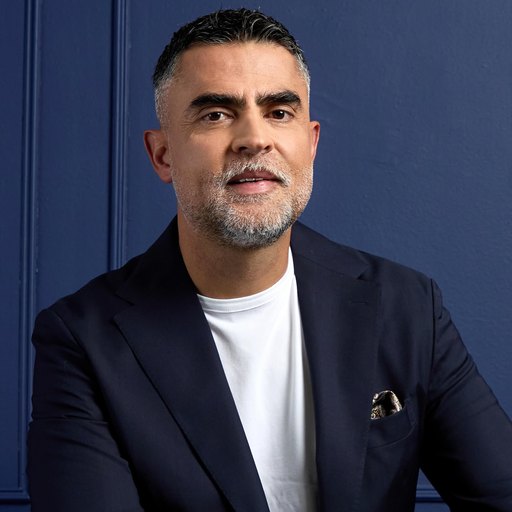
CEO & Founder · Edgebound Labs
Roman founded Edgebound Labs with the vision of building scalable digital commerce systems. With more than 20 years of experience in enterprise technology and eCommerce, he has led B2B, B2C and D2C implementations for retailers, distributors and own-brand companies in Mexico and across LATAM. He operates from Mexico City with a deep understanding of the regional regulatory, fiscal and logistics ecosystem of digital commerce.
Evaluating agencies for your next eCommerce project?
Book a 30-minute architecture conversation with our team. We review your case, your current stack and your vertical (B2B, B2C or D2C), and tell you honestly whether Edgebound fits or another agency serves you better.